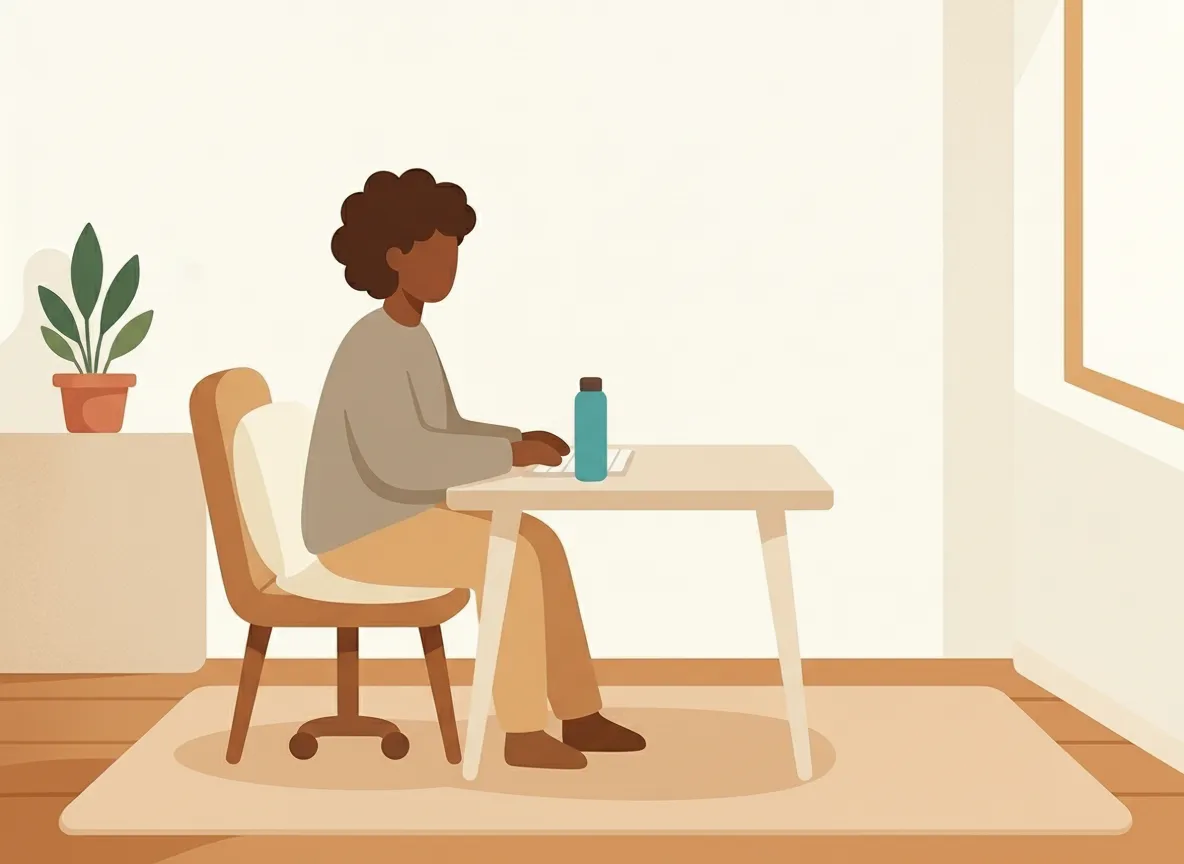
What this experience covers
This experience covers what people describe about using a standing desk as part of managing hemorrhoid discomfort — particularly during flare-ups when sitting for long periods is painful. It is a composite drawn from many anonymised accounts.
Prolonged sitting is one of the most commonly cited aggravating factors for hemorrhoids. The pressure on the perineal area, reduced blood flow, and the tendency to remain in one position for hours all contribute. A standing desk is one strategy people use to reduce this pressure, but the reality is more nuanced than simply standing up all day.
The pattern
What people find helpful
- Alternating between sitting and standing — this is the most consistent theme. People who describe the best results are not standing all day; they are switching positions regularly
- Reduced pressure during flares — standing removes direct pressure from the hemorrhoid area, which can provide immediate relief during acute episodes
- Better posture awareness — people describe becoming more aware of their body position and taking more breaks
- A sense of control — having the option to stand feels empowering when sitting is causing distress
What people find challenging
- Standing all day is not the answer — prolonged standing can also worsen hemorrhoids by increasing pressure in the lower body. Blood pools in the legs and pelvic area when standing still for extended periods
- Fatigue — standing for hours is tiring, particularly when you are already dealing with the exhaustion of chronic discomfort
- Not always practical — some work environments, meetings, or tasks require sitting
- Cost — adjustable standing desks can be expensive, though converter units that sit on top of an existing desk are more affordable
The pattern that works best
People consistently describe the best approach as regular alternation:
- Stand for 20 to 30 minutes
- Sit for 20 to 30 minutes (on a comfortable cushion if needed)
- Take a brief walk or stretch between positions
- Listen to your body — some days sitting is fine; others require more standing
The key insight is that movement and position changes matter more than any single position.
What people wish they had known
- That standing all day is not better than sitting all day — alternating is the goal
- That a cushion designed to reduce perineal pressure can make sitting much more comfortable
- That even without a standing desk, taking regular standing breaks achieves much of the same benefit
- That the relief from standing is real but temporary — addressing the underlying hemorrhoids through stool management and medical treatment is what resolves the problem long-term
If you are navigating hemorrhoids alongside a desk job and want to talk through strategies, our chat is here.
When to contact your doctor
Seek medical attention if you experience:
- Hemorrhoid pain that is severe and not relieved by position changes
- Heavy or persistent bleeding
- A lump that becomes hard, very painful, or dark-coloured
- Symptoms that are significantly affecting your ability to work