What this experience covers
This experience covers the practical realities of working a desk job while managing a colorectal condition — fissure, hemorrhoids, fistula, or post-surgical recovery. It is a composite drawn from many anonymised accounts.
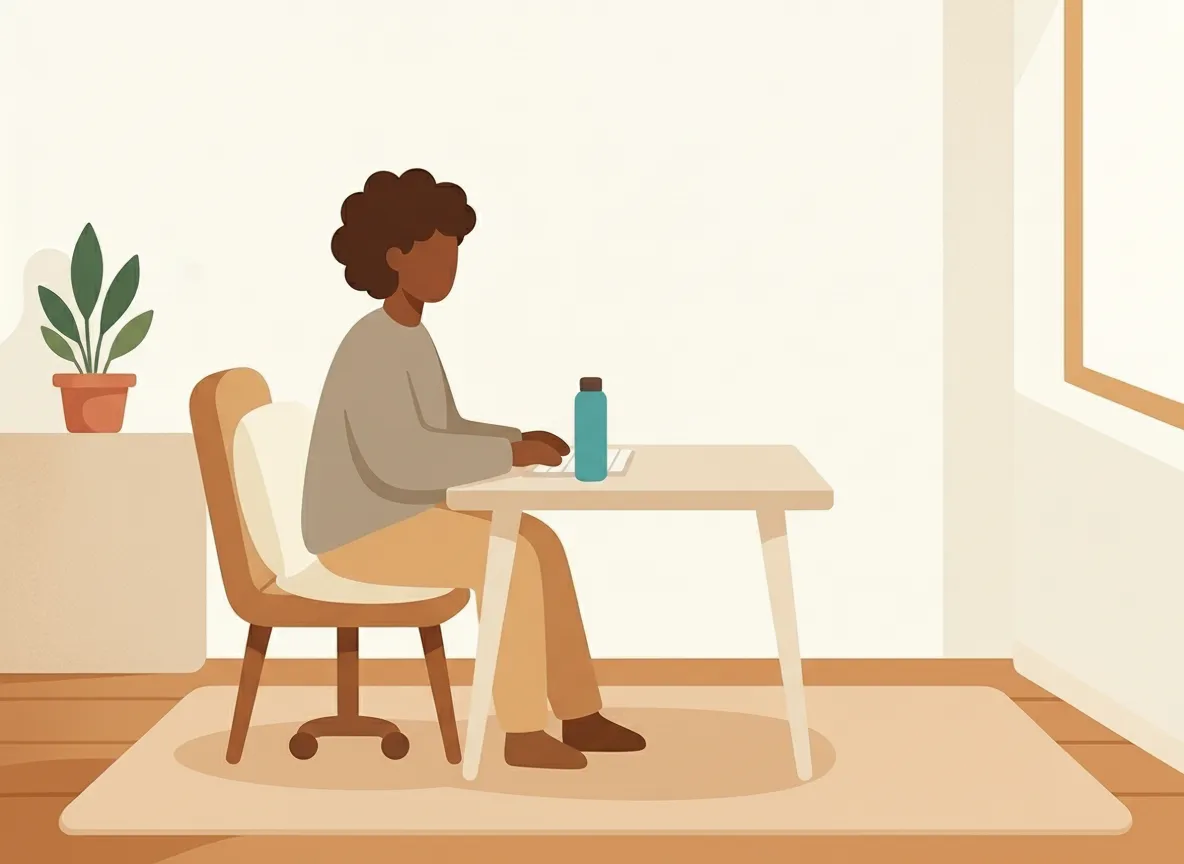
Sitting for hours is one of the most commonly reported aggravating factors for colorectal conditions. For people whose livelihood depends on desk work, this creates a daily tension between what their body needs and what their job requires.
The pattern
The core problem
Sitting puts sustained pressure on the perineum and anal area. For someone with an active fissure, hemorrhoids, or a healing surgical wound, this pressure causes:
- Increased pain throughout the day
- Worsening of symptoms by late afternoon
- Difficulty concentrating because of discomfort
- Dreading the morning commute and the work day ahead
What people do
People describe a range of strategies:
- Cushions — coccyx cushions, ring cushions, or even a folded towel. Most people find a cushion that works for them through trial and error.
- Regular breaks — standing for a minute or two every 30 to 45 minutes. Some people set a phone timer.
- Standing desks — where available, alternating between sitting and standing throughout the day.
- Bathroom access — knowing where the nearest bathroom is and feeling confident they can use it without scrutiny. This matters enormously for people managing sitz baths, drainage, or post-bowel-movement care during work hours.
- Strategic scheduling — putting meetings earlier in the day when discomfort is lower, and scheduling deep work for times when they can manage their position freely.
The things nobody talks about
People describe carrying spare gauze pads to work. Taking a peri bottle into the office bathroom. Timing bowel movements around meetings. These are the invisible logistics of managing a colorectal condition while maintaining a professional life.
When to contact your doctor
Seek medical attention if you experience:
- Pain that is consistently worsening despite positional changes and breaks
- New symptoms such as bleeding or discharge at work
- Symptoms that are preventing you from doing your job
- If you need documentation for workplace accommodations