What this experience covers
This experience captures what the healing process for an anal fissure actually feels like in practice — not the textbook description, but the messy, non-linear reality that people describe living through. It is a composite drawn from many anonymised accounts.
The central truth that people return to again and again: fissure healing is not a straight line. There are good days and bad days, progress and setbacks, hope and frustration, often within the same week.
The pattern
The hope phase
Most people describe a period early in treatment where things seem to be improving. Pain decreases. Bowel movements become more manageable. There is a growing sense that maybe this is working.
This phase feels wonderful and fragile. People describe being afraid to trust it.
The first setback
Then it happens. A harder bowel movement. A day of dietary indiscretion. Stress. Something disrupts the routine, and the pain returns — sometimes at a level that feels like being back to square one.
People describe this first setback as devastating. Not because the pain itself is worse than before, but because the loss of progress feels so cruel. The question that dominates: “Has the fissure re-torn? Am I starting over?”
The oscillation
What follows is a period that most people describe as the hardest emotionally. Good days and bad days alternate in no predictable pattern. One week might have five good days and two bad ones. The next might be the reverse.
People describe trying to find meaning in the pattern — was it something they ate? Did they sit too long? Was the bath not warm enough? Sometimes there is a clear cause. Often there is not.
The gradual trend
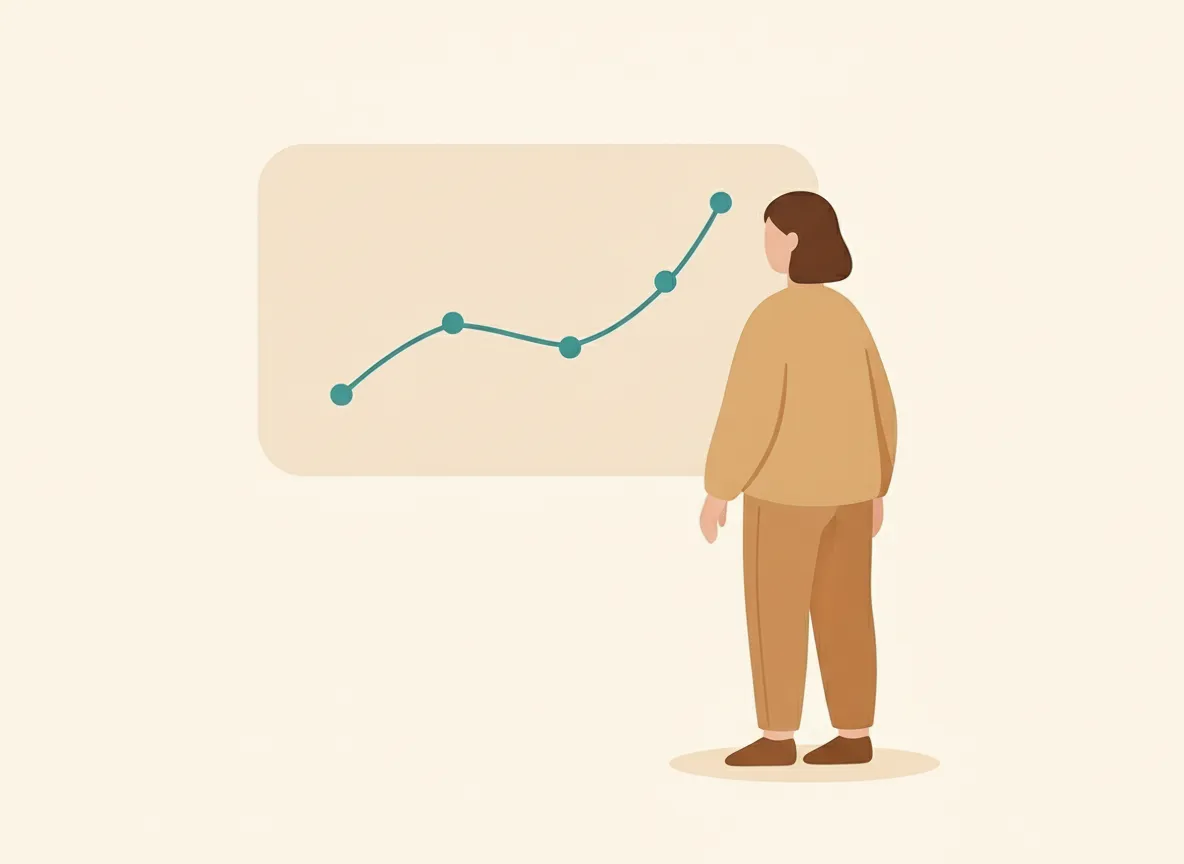
The realisation that usually comes weeks or months into this oscillation: the bad days are getting less bad, and the good days are becoming more frequent. The overall trend is upward, even though any individual day might not show it.
This is the pattern that people wish they had been told about from the beginning. Not “you will heal in six to eight weeks” but “healing happens as a gradual shift in the ratio of good days to bad days.”
What people wish they had known
- That setbacks within an overall improving trend are normal, not signs of failure
- That tracking symptoms in a simple journal makes the gradual improvement visible
- That the emotional toll of non-linear healing is significant and valid
- That comparing their timeline to anyone else’s is unhelpful
When to contact your doctor
Seek medical attention if you experience:
- Pain that is consistently getting worse over weeks, not just fluctuating
- Bleeding that is heavy or increasing
- No improvement at all after six to eight weeks of consistent treatment
- Fever or signs of infection
- Symptoms that concern you — your doctor expects these calls